Gym rubber flooring takes more abuse than almost any other surface in a fitness facility. Every day it absorbs sweat, chalk, dust, body oils, and equipment friction. Over time, this buildup does more than just make the gym look dirty. It can damage flooring, create strong odors, and raise hygiene concerns for members.
Many gym owners focus on daily wiping and surface cleaning. While that helps maintain appearance, it does not remove contaminants trapped inside rubber flooring.
Understanding the difference between routine gym floor cleaning and deep rubber gym floor maintenance is key to protecting your facility and creating a better member experience.
Weekly Gym Floor Cleaning vs Deep Cleaning
Regular surface cleaning is essential in any gym environment. Staff typically wipe equipment, mop floors, and sanitize high traffic areas daily or several times per week.
This type of cleaning the gym helps remove visible dirt and sweat. However, rubber flooring is porous and textured. Sweat, chalk, and bacteria gradually work their way deeper into the material.
Without periodic deep cleaning, these contaminants accumulate below the surface.
A typical cleaning schedule looks like this:
Weekly Maintenance Cleaning
Weekly or routine cleaning focuses on keeping the gym looking presentable for members.
This often includes:
Surface mopping of rubber floors
Wiping machines with gym equipment cleaner
Spot cleaning sweat marks
Removing chalk dust and debris
Weekly cleaning helps maintain appearance but does not fully restore flooring.
Deep Rubber Floor Cleaning
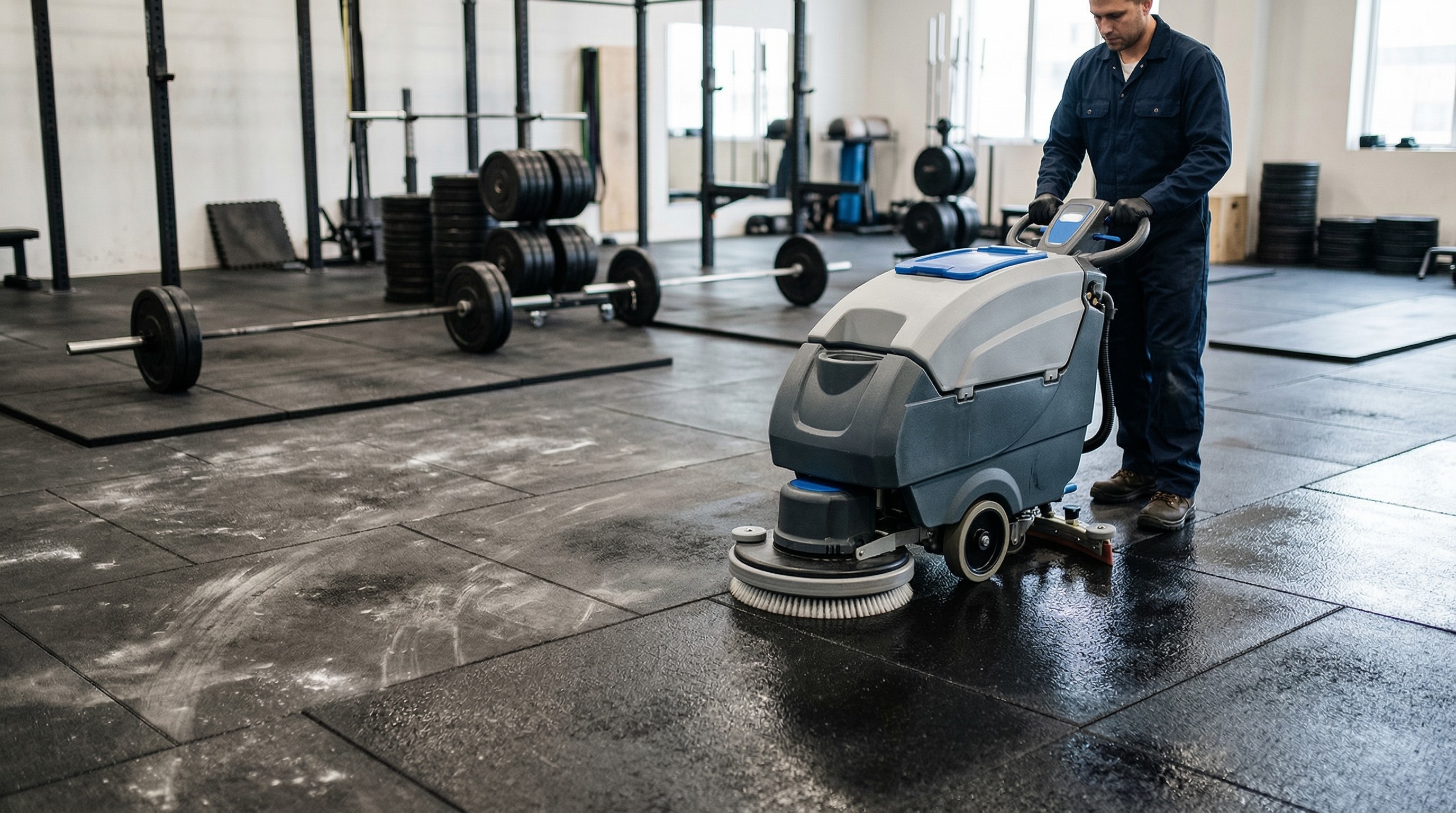
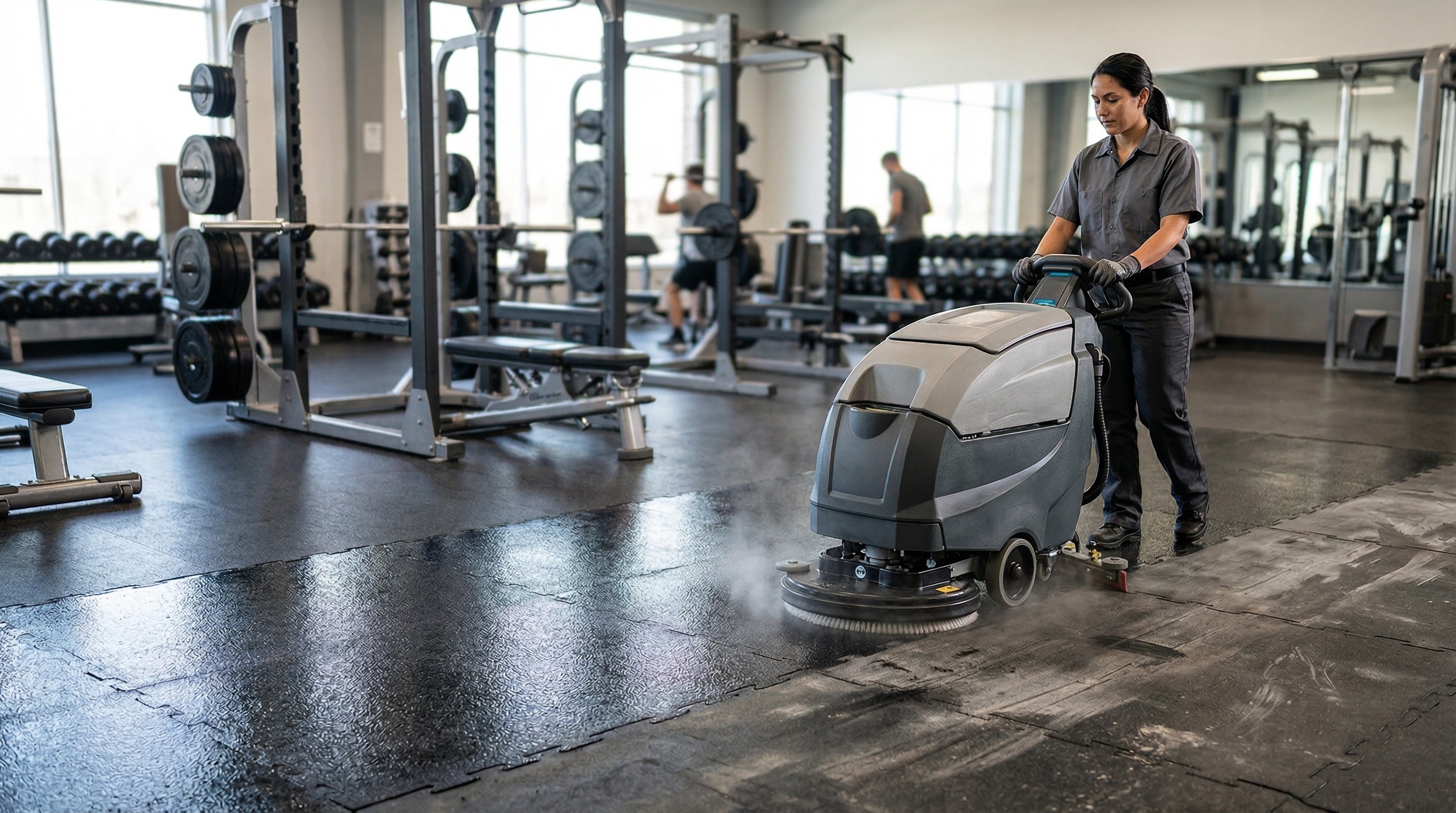
Deep cleaning uses specialized equipment and rubber safe cleaning solutions designed for gym flooring.
Professional gym cleaners remove embedded contaminants that routine cleaning cannot reach.
Deep cleaning often includes:
Industrial scrubbers designed for rubber gym floors
Professional gym rubber mat cleaner products
Extraction systems that pull bacteria and moisture out of the flooring
Restoration that brings rubber surfaces back to a near new appearance
For most facilities, deep cleaning should be scheduled every 1 to 3 months depending on usage.
Sweat and Bacteria Build Up Faster Than You Think
Gyms naturally produce large amounts of sweat every day. During peak hours, dozens of people may be training on the same flooring areas.
Sweat seeps into rubber flooring along with bacteria and organic residue.
When this buildup is not removed, it can cause several problems:
Strong persistent odors
Bacterial growth in flooring pores
Sticky or dull looking rubber surfaces
Hygiene concerns for members
Members often notice these issues before owners do. Even if the gym appears clean visually, odors and sticky floors create a negative impression.
Regular gym cleaning services help eliminate bacteria and keep the training environment fresh.
Equipment Oils Can Damage Rubber Flooring
Another hidden issue is oil from gym equipment.
Cardio machines, racks, and resistance equipment often release small amounts of lubricant or grease over time. These oils slowly transfer onto the rubber flooring below.
When oils mix with sweat and dirt, they can penetrate the rubber and cause long term damage.
This leads to:
Discoloration of rubber mats
Slippery training areas
Faster degradation of flooring
Routine gym floor cleaning removes surface oils, but deep cleaning is needed to fully extract them from the material.
Proper rubber gym floor maintenance helps extend the lifespan of flooring and prevents costly replacements.
Why Professional Gym Cleaning Matters
Many gyms attempt to handle all cleaning internally. While this works for basic maintenance, most facilities lack the equipment needed for deep rubber floor restoration.
Professional gym cleaning services use industrial machines specifically designed for rubber flooring systems.
These services typically include:
Deep rubber mat cleaning
Turf and functional training zone sanitation
Equipment cleaning using professional gym equipment cleaner solutions
Removal of sweat, oils, and chalk buildup
Commercial gym cleaning providers understand the unique needs of fitness facilities and avoid chemicals that can damage rubber surfaces.
Recommended Cleaning Schedule for Most Gyms
While every facility is different, most gyms benefit from a layered cleaning approach.
A balanced schedule often includes:
Daily equipment wiping and spot cleaning
Weekly routine gym floor cleaning
Monthly or quarterly deep rubber floor cleaning
High traffic strength gyms may require deep cleaning more frequently due to chalk use and heavy lifting zones.
Maintaining this schedule ensures the flooring remains hygienic, odor free, and visually appealing for members.
The Impact on Member Experience
Clean flooring directly influences how members feel about a facility.
Fresh rubber flooring, odor free training areas, and well maintained equipment create a more professional environment.
Members are more likely to:
Stay longer during workouts
Recommend the gym to friends
Leave positive reviews online
Consistent gym cleaning reinforces the perception that the facility is well managed and committed to hygiene.
Final Thoughts
Gym rubber flooring requires more than basic mopping to stay in good condition. Sweat, bacteria, and equipment oils build up over time and slowly damage the surface.
By combining weekly gym floor cleaning with scheduled deep cleaning, gym owners can protect their flooring investment and maintain a professional environment.
Regular rubber gym floor maintenance keeps facilities looking better, smelling fresher, and performing at a higher standard for members.