Signs Your Gym Equipment Needs Servicing (Before It Breaks)
Gym equipment works hard every single day. Barbells are dropped, rowers are used for thousands of repetitions, and cardio machines run for hours without stopping. Over time, even the highest quality equipment begins to wear down.
Many gym owners only think about servicing equipment once something stops working. By that point the machine is already out of order, members are frustrated, and repair costs are higher than they should be.
Recognising early warning signs allows gym owners to service equipment before a breakdown happens. Preventative maintenance keeps the facility running smoothly and protects expensive machines.
Why Preventative Equipment Servicing Matters
Modern gyms rely on dozens of machines operating at the same time. When one piece of equipment fails, it creates inconvenience for members and additional pressure on the rest of the machines.
Preventative servicing helps avoid these problems by identifying wear before parts fail completely.
Routine maintenance helps gym owners:
Extend the lifespan of equipment
Reduce unexpected breakdowns
Improve member safety
Maintain a professional training environment
Small issues are often inexpensive to fix when detected early.
Noisy Rowing Machines
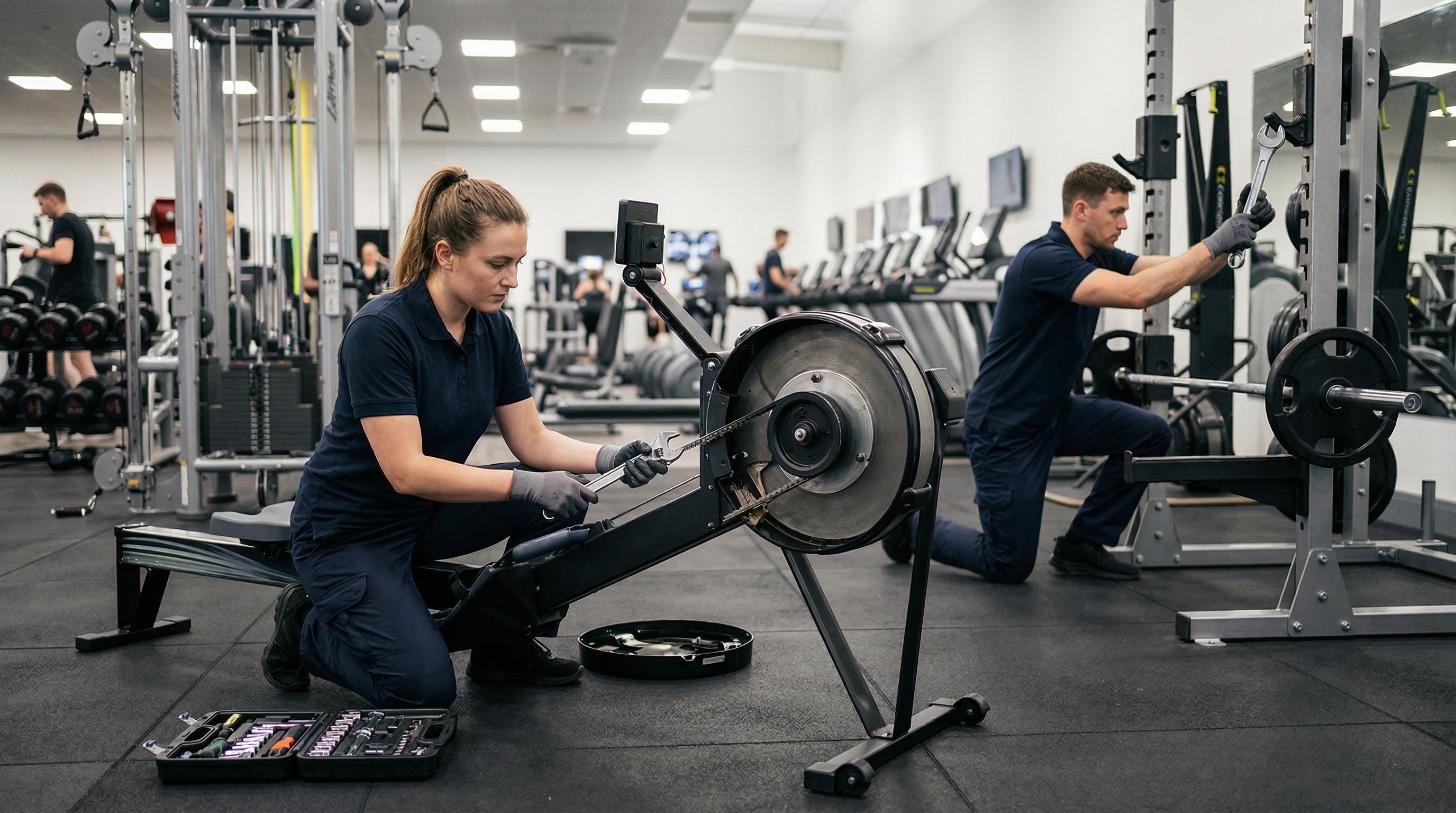
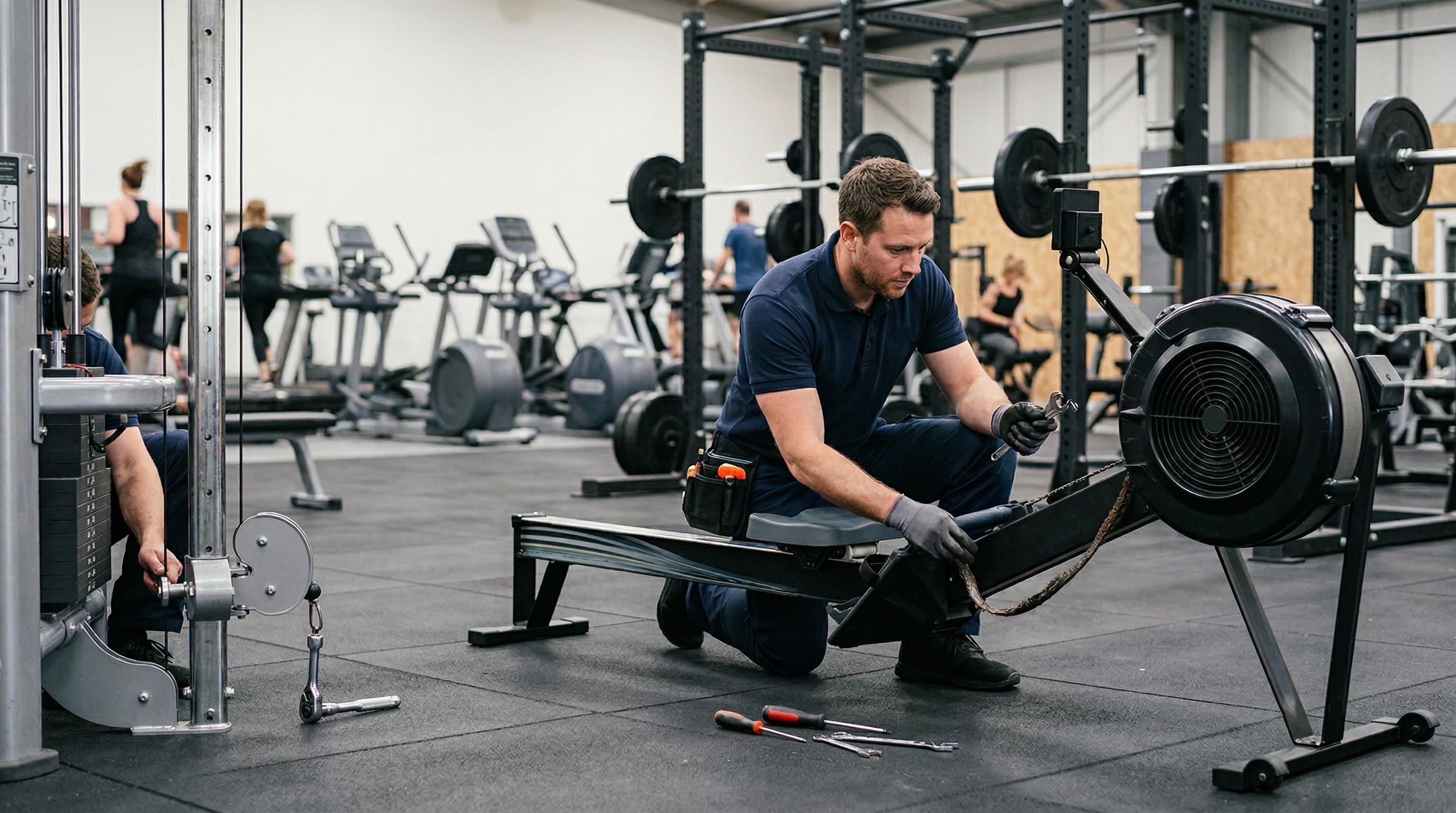
Rowers are one of the most heavily used pieces of equipment in many gyms. Thousands of pulls each week place constant stress on the drive system, belt, and internal components.
When a rowing machine begins making unusual sounds, it is usually an early sign that something needs attention.
Common warning signs include:
Clicking during each pull
Grinding sounds from the flywheel
Loud vibration during use
Resistance feeling inconsistent
These noises often indicate belt wear, loose components, or debris inside the flywheel housing.
Servicing the rower early can prevent a full belt failure that takes the machine out of service.
Loose or Wobbly Benches
Weight benches experience constant movement and heavy loading. Members adjust them frequently and often move them across the gym floor.
Over time, bolts and frame connections can loosen.
Signs a bench needs servicing include:
Slight wobble when someone sits down
Visible movement during pressing exercises
Screws or bolts gradually backing out
While a loose bench might seem like a minor issue, it can quickly become a safety risk when members are lifting heavy weight.
Routine inspections during equipment servicing ensure all connections remain secure.
Unstable Squat Racks
Squat racks are among the most critical pieces of equipment in a gym. They support heavy barbells and must remain completely stable.
Constant barbell impacts can gradually loosen bolts or shift the rack frame.
Warning signs include:
Small frame movement when re racking weight
Safety arms that no longer align properly
Hardware slowly loosening over time
If a rack becomes unstable, it should be inspected and tightened immediately.
Regular maintenance checks ensure squat racks remain solid and safe for members.
Cardio Machines Running Hot
Treadmills, bikes, and other cardio equipment contain motors and internal fans that regulate temperature during operation.
Dust and chalk particles often collect inside these machines over time.
When airflow becomes restricted, machines can begin overheating.
Early warning signs include:
Machines shutting down unexpectedly
Strong heat coming from the motor area
Reduced performance during workouts
Cleaning ventilation areas and servicing the machine can prevent costly motor damage.
Fraying Cables on Strength Machines
Cable machines rely on strong steel cables that move through pulleys thousands of times each week.
Over time these cables begin to wear.
Signs that cables need attention include:
Visible fraying
Rough or jerky movement during exercises
Unusual sounds when the cable moves
Catching cable wear early is critical because a snapped cable can cause both equipment damage and potential injury.
Routine servicing allows worn cables to be replaced before failure occurs.
Maintenance Combined With Cleaning
Many gyms benefit from working with service providers who combine equipment inspections with regular gym cleaning visits.
While cleaning the gym floor and equipment, trained professionals can also check for early mechanical issues.
This allows technicians to spot problems such as:
Loose rack hardware
Worn rower belts
Dust buildup inside machines
Early signs of cable wear
Combining cleaning and maintenance reduces downtime and keeps the facility running efficiently.
The Cost of Ignoring Small Issues
Small mechanical problems rarely stay small for long.
A loose bolt today can become a broken frame tomorrow. A worn belt can suddenly snap during a workout.
When equipment fails unexpectedly it can lead to:
Out of order machines
Member frustration
Expensive repairs
Negative reviews
Preventative servicing ensures equipment stays reliable and safe.
Final Thoughts
Gym equipment is a major investment. Protecting that investment requires regular inspections and preventative maintenance.
By paying attention to early warning signs such as noisy rowers, loose benches, unstable racks, or overheating cardio machines, gym owners can address problems before they become expensive repairs.
Routine equipment servicing keeps machines running smoothly, improves member safety, and helps maintain a professional facility that members trust.